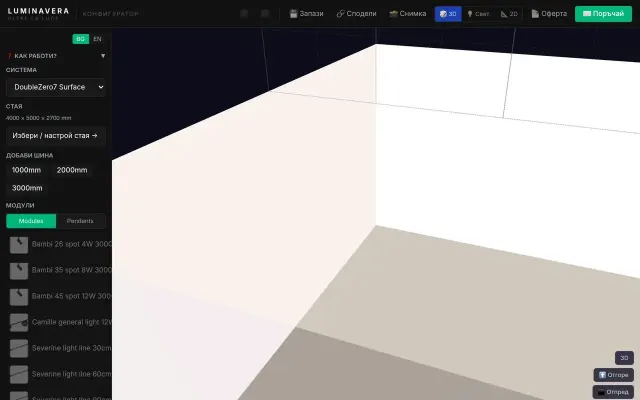
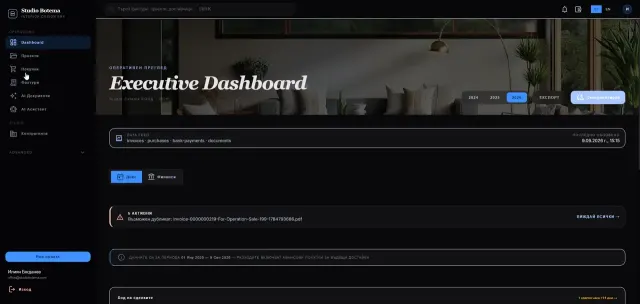
 FIG. 1 · LIVE SCREENSHOT
LIVE SINCE 2024CASE STUDY →
 Kristo PriftiSoftware architect. Refactoring the future, one less TODO at a time.
Teams building AI products and custom software usually come to me with two questions: how should we build this, and why is it taking so long. I like answering both, and I'd rather show you a working version the next morning than talk about it.
Proven tools, so the next developer is productive on day one.
Your team edits content, adds products and runs it without calling me.
Systems grow module by module, without starting over.
Short loops, working software, decisions made on real screens.
A one-week review of your codebase. You get a ranked list of what is costing you money, and a plan to fix it.
If you hire me for the cleanup afterwards, the check is credited in full.
Get a quote →A new product, MVP or internal tool. Live in weeks, and built to survive your first funding round without a rewrite.
Scope, price and date in writing before any work starts.
Get a quote →A senior software architect for your team a few days a month: design reviews, tough technical calls, hiring help.
Good for teams without a senior architect of their own.
Get a quote →NOT SURE WHICH ONE FITS? SEND A FEW LINES ABOUT YOUR PROJECT AND I'LL TELL YOU.
Every supplier order used to live in a spreadsheet or an email thread, and nobody knew where things stood. Kristo took the time to understand how we actually work and built the system around that. Six weeks later the whole team was using it every day.
We used to depend only on referrals. Now people find us on Google when they search for their exact legal problem. The inquiries keep coming in, and we haven't spent anything on ads.
Our customers build their own lighting system in 3D and see the price as they go. We stopped writing quotes by hand, and it runs smoothly even on a phone. That part honestly surprised us.

I'm Kristo. I've spent twelve years building software for a living: SaaS and B2B platforms, AI features, online stores and payments, mobile apps, and more than a few legacy systems someone swore were "almost done". I still write code most days, and I've led the teams writing it, so I've been both the person creating tech debt and the person paying it off.
notechdebt is what came out of that. After enough rescues you see the pattern: projects rarely fail because the code was hard. They fail because every shortcut was borrowed against the future and nobody kept the receipts. So I build the boring way, fast, and leave things in a state your next developer will thank me for. Or at least won't curse me for.
Technical debt is the extra cost you pay every time you change software that was built with shortcuts. Like a loan, it charges interest: each new feature takes longer, breaks more things and needs more people. You can design it out from the start, or pay it down in order, starting with whatever costs you the most.
A one-week review of your codebase at a fixed price. You get a ranked list of what is costing you money and a plan to fix it. If you hire me for the cleanup afterwards, the check is credited in full.
Most builds go from brief to production in 4 to 8 weeks. FreeMyTime took 2 to 3 weeks, the LuminaVera 3D configurator took 6 weeks, and the Studio Botema ERP was live in about 6 weeks. After launch, systems grow module by module, without a rewrite.
Every project is scoped and quoted on its own. Builds are fixed price after scoping, with scope, price and date in writing before any work starts. The Debt Check is a fixed price, and Architect on call is billed monthly and can be cancelled anytime.
Proven, boring tools, so the next developer is productive on day one: React and Next.js on the front end, Node and Python behind it, PostgreSQL for data, three.js for 3D, Stripe for payments, and machine learning or LLMs where they remove real manual work.
Yes. The Debt Check starts from the code you already have, and Architect on call puts a senior architect next to your team a few days a month for design reviews, tough technical calls and hiring help.
Yes, when it pays for itself. PropIntel uses a machine learning model to estimate property prices in minutes instead of hours of manual work. AI goes where it removes real work, not where it only looks good in a demo.
Yes. Projects run remotely and in English, with short loops, working software and decisions made on real screens instead of long meetings.